
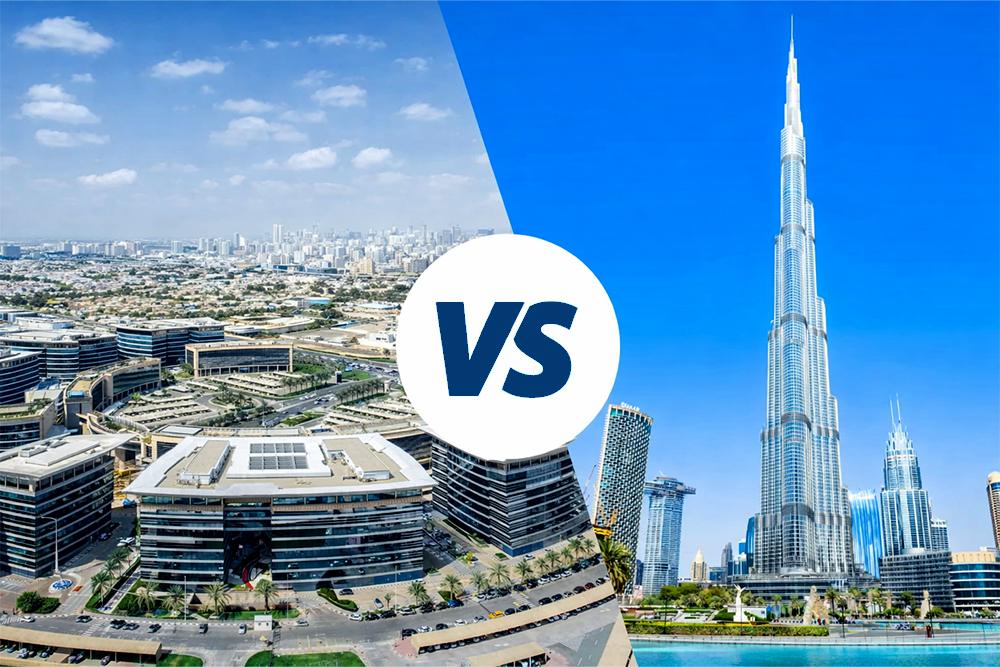
The United Arab Emirates has been and continues to be the attraction of visionaries, entrepreneurs and international conglomerates. Beginning the year 2026, the UAE economy has never been as dynamic as it is today, especially with a complete implementation of the 9% Corporate Tax system and new resolutions of the Onshore-Access. For any entrepreneur, the ultimate crossroads remains the same: Mainland vs Free Zone. Choosing the right jurisdiction isn’t just a legal formality; it is the most critical strategic decision you will make.
At Business One Tax And Accounting, we realize that it is not merely a matter of a map to sail these waters, it takes the local knowledge of experts. You can be looking at the busy streets of Downtown Dubai or the specialized technological centers of the Northern Emirates, this guide will show you the way to succeed.
Understanding the Core Differences: Mainland vs. Free Zone
The fundamental choice between Mainland vs Free Zone boils down to where you want to trade and who you want to trade with. While the UAE has simplified foreign ownership laws significantly in recent years, the two jurisdictions still operate under different regulatory frameworks.
What Is a Mainland Company in the UAE?
A mainland company is an “onshore” entity registered under the Department of Economy and Tourism (DET) or the Department of Economic Development (DED) of a specific emirate. Historically, this required a local partner, but today, most activities allow for 100% foreign ownership.
Key Characteristics of UAE Mainland Business Setup
- Free Trade: There is no restriction on the place of trade in the UAE, both with government bodies and with the local retail market itself.
- Physical Presence: It is required to have a physical office location (at least 200 sq. ft.).
- Scalability: Visa Flexibility Visa flexibility provides great scalability as the size of your office space determines how many visas you can request.
- Government Tenders: UAE government contracts with large amounts of money can be bid by Mainland companies.
Industries Thriving on the UAE Mainland
Retail outlets, restaurants, construction firms, and professional service providers—such as those seeking Accounting Services on a large scale—thrive on the mainland because they require direct access to the local population. If your business model involves “on-the-ground” operations, UAE mainland company formation is your best bet.
What Is a Free Zone Company in the UAE?
A Free Zone is a designated geographical area within the UAE that has its own set of rules, regulations, and even its own court system in some cases (like the DIFC). These districts have been industry oriented with specific interests in areas such as technology, media or commodities.
Defining UAE Free Zones and Their Purpose
Free Zones were designed to boost international trade. They offer a “plug-and-play” environment where you can start business in the Dubai free zone with minimal red tape. They suit best the firms that have international operations or operating within the zone.
Popular Free Zones in Dubai, Abu Dhabi, and Sharjah
- DMCC (Dubai Multi Commodities Centre): It is a trading and commodity centre in the world.
- DIFC (Dubai International Financial Centre): The most important financial centre of MEASA.
- SHAMS (Sharjah Media City): Digital entrepreneurs and creative professionals will love this one.
- KEZAD (Abu Dhabi): Perfect in terms of manufacturing and logistics.
Direct Comparison: Key Factors for Your Business Decision
In the comparison between Mainland and Free Zone, there are various considerations that can be applied in practice. Here is how they stack up in 2026.
Business Ownership Regulations: Who Owns Your Company?
In a Free Zone, 100% foreign ownership has always been the gold standard. On the Mainland, while 100% ownership is now available for over 1,000 commercial and industrial activities, certain “strategic” sectors still require a UAE National partner holding 51% shares. At Business One Tax & Accounting, we help you identify which category your business falls into to ensure 100% compliance.
Scope of Business Activities and Trade Licenses
Mainland companies enjoy total geographical freedom. Conversely, a Free Zone company is generally restricted to trading within its zone or internationally. To trade on the mainland, a Free Zone entity must typically go through a local distributor or open a mainland branch.
Office and Visa Requirements for Your UAE Company
If you want to set up a company in the Dubai mainland, you must rent a physical office. But in the case of people wishing to create a company in free zone Dubai, there is an available option such as flexi-desks or virtual offices which can offer the startups and freelancers a lower initial overhead.
Financial and Tax Implications
The tax landscape in 2026 is sophisticated. While the UAE remains a low-tax environment, the rules are strict.
Don’t miss this: A Complete Guide to Corporate Tax in UAE 2026 Updates
Understanding UAE Corporate Tax for Mainland and Free Zone Companies
The Federal Corporate Tax is 9% on the income that is above AED 375,000 in both jurisdictions. Nonetheless, even the so-called Qualifying Free Zone Persons (QFZPs) still have the opportunity to receive a 0 percent rate on the qualifying income as long as they have sufficient substance in the UAE. Navigating these exemptions requires specialized Corporate Tax Services
Also read this: How to Register for Corporate Tax in the UAE: Step-by-Step Guide
Are There Any Hidden Costs or Fees?
To Setup company in Dubai mainland, it often involves higher initial costs due to municipality fees and mandatory office rentals. Free Zones offer “all-inclusive” packages but watch out for annual renewal fees and the cost of mandatory audits for certain zones.
VAT Registration and Compliance Differences
VAT at 5% applies across the board if your taxable turnover exceeds AED 375,000. However, “Designated Zones” for VAT purposes offer specific advantages for those moving goods internationally. Accurate VAT Services are essential here to avoid hefty fines from the FTA.
Expert Tip: Whether you choose Mainland or Free Zone, maintaining clean books is non-negotiable in 2026. Business One Tax & Accounting provides the specialized Bookkeeping Services you need to stay audit-ready.
Government Approvals and Regulatory Oversight
The regulatory control of the UAE differs: Mainland companies are to report to the DED/DET, whereas Free Zones are controlled by autonomous bodies. Both entail a high level of compliance with 2026 financial transparency and licensing protocols.
‣ Which Authorities Govern Mainland Businesses?
The main regulator of the formation of companies in the UAE mainland is the Department of Economy and Tourism (DET). You can also require approvals of the Ministry of Economy or the Dubai Municipality depending on your activity.
‣ How Are Free Zone Companies Regulated?
Each Free Zone is governed by its own independent Authority (FZA). These authorities handle everything from your license issuance to your visa processing, providing a “one-stop-shop” experience.
Step-by-Step Guide to Setting Up Your UAE Business
To start a business in a global city, there must be a guideline on which to follow to achieve the legal and administrative milestones of 2026. Whether your strategy leads you toward the unrestricted reach of the Mainland vs Free Zone efficiency, the setup process is a structured journey toward operational readiness. At Business One Tax & Accounting, we simplify these transitions, ensuring that while you focus on your market entry, your compliance is managed by experts.
How to Set Up a Mainland Company in Dubai UAE
Working with experienced business setup consultants Dubai can reduce your setup time from months to days.
Step 1: Choosing Your Business Activity and Legal Structure
Define whether you are a Limited Liability Company (LLC) or a Civil Works company. This determines your license type.
Step 2: Getting Initial Approval and Reserving a Trade Name
Your proposed name should be put before the DED to get the name approved, but it should not contravene any trademark or cultural rules.
Step 3: Finding a Local Service Agent (LSA) if Required
On professional licenses, where you own 100 percent of the company, you require the LSA to be your point of contact with the government departments.
Step 4: Finalizing Paperwork and Obtaining Your License
The Notary Public should sign the Memorandum of association (MOA) and obtain office lease (Ejari) and pay the license fees.
How to Set Up a Company in a UAE Free Zone
The process to start business in the Dubai free zone is streamlined and often entirely digital.
Step 1: Selecting the Right Free Zone for Your Industry
Choose a place that will furnish the best ecosystem to your niche, e.g. JAFZA to choose logistics or Dubai Media City to choose advertising.
Step 2: Submitting Your Application and Business Plan
Most Free Zones require a brief business plan to ensure your activities align with their regulations.
Step 3: Registering Your Company and Signing Agreements
It is to come up and sign the Articles of Association and lease agreement of your preferred office space (even flexi-desk).
Step 4: Acquiring Your Business License and Visas
Once the FZA issues your license, you can begin the process for your residence visa and Emirates ID.
At Business One Tax & Accounting, we simplify the complex. From the initial consultation with our business setup consultants Dubai to your first VAT Services, we are with you every step of the way. Let’s build your UAE success story together.
The Role of Financial Excellence in Your Setup
Building a business in the UAE is about more than just getting a piece of paper (the license). It’s about building a sustainable, compliant foundation. This is where Business One tax & Accounting excels. We don’t just help you pick between Mainland vs Free Zone; we ensure your back-office is bulletproof.
Our comprehensive suite of services includes:
- Accounting Services: Tailored financial reporting to keep you informed.
- Bookkeeping Services: Day-to-day management of your ledgers.
- VAT Services: Ensuring your filings are accurate and timely.
- Corporate Tax Services: Optimizing your tax position under the 2026 laws.
Apart from above mentioned services Business One tax & Accounting, also provide Payroll Services to manage your most valuable asset.
you might want to read this: Payroll Management Explained: What It Is and How It Works
The End Note!
Deciding between Mainland vs Free Zone is the first step in a journey that can redefine your professional future. The UAE offers a world of opportunity, but the complexity of 2026 regulations means you shouldn’t go it alone. Whether you choose the unlimited reach of the mainland or the tax-efficient hubs of the free zones, professional guidance is your greatest asset.
Frequently Asked Questions